DRIP MSc scholar

DRIP MSc scholar

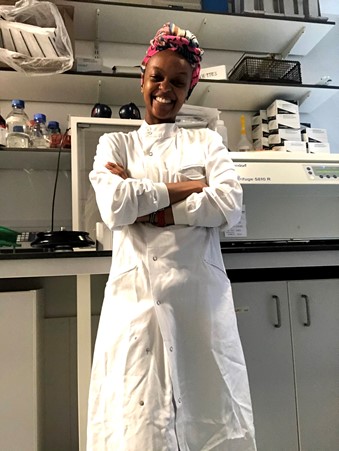
Judith Nabwire Oundo

<p style="text-align:justify"><strong><span style="color:#201F1E">Research Project</span></strong><span style="color:#201F1E">: Bio-ecology of False codling moth, <em>Thaumatotibia leucotreta </em>(Meyrick) Lepidoptera: Tortricidae) in Capsicum Agro-Systems in Selected Counties in Lower Eastern.</span></p> <p style="text-align:justify"><span style="color:#201F1E">Judith Nabwire&nbsp;is a </span><span style="color:#201F1E">DRIP</span><span style="color:#201F1E"> MSc Scholar supervised by&nbsp;Dr Shepard Ndlela. Her research aims to determine the occurrence, host interaction and management of <em>Thaumatotibia leucotreta </em>in Capsicum production system for improved foreign earnings and farmers livelihood. &nbsp;She completed her BSc in Horticulture at the University of Nairobi. She is currently </span><span style="color:#201F1E">registered for her</span><span style="color:#201F1E"> MSc in Crop protection at University of</span><span style="color:#201F1E"> </span><span style="color:#201F1E">Nairobi </span></p>

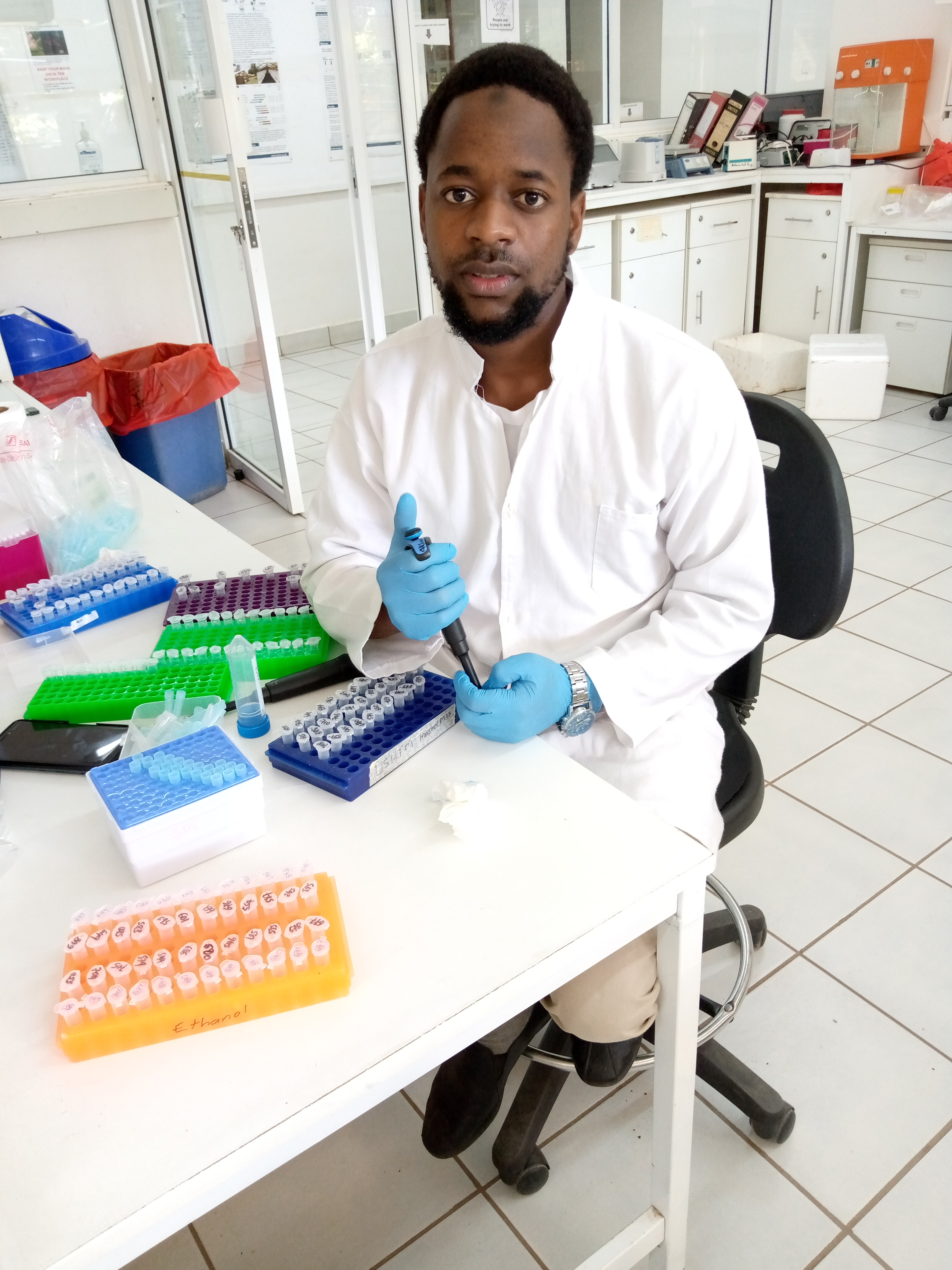
Gno-Solim Ela N'Dakpaze

<p><strong>Research Project</strong>: Climate Resilience of Tomato Production Using Climate Smart pest management technologies, Uganda.</p> <p>N’dakpaze Gnô-Sôlim Ela is a DRIP MSc. Scholar supervised by Dr. Henri Tonnang (icipe), Prof Daniel Olago (University of Nairobi), Dr. Dorothy Amwata (South Eastern Kenya University). His research aims to find the barriers /opportunities and the importance of digital tools in the adoption of climate Smart Pest Management Technologies (parasitoids) in sustainable management of invasive pest <em>Tuta absoluta</em> in Uganda. He completed his BSc in Biological Sciences at the Catholic University of Eastern Africa and a Diploma in psychology at AMANI. He is currently pursuing his MSc in Climate Change and Adaptation at the University of Nairobi. Gnô-Sôlim Ela has a certification in Integrated Environmental impact assessment and environmental Audit.</p>

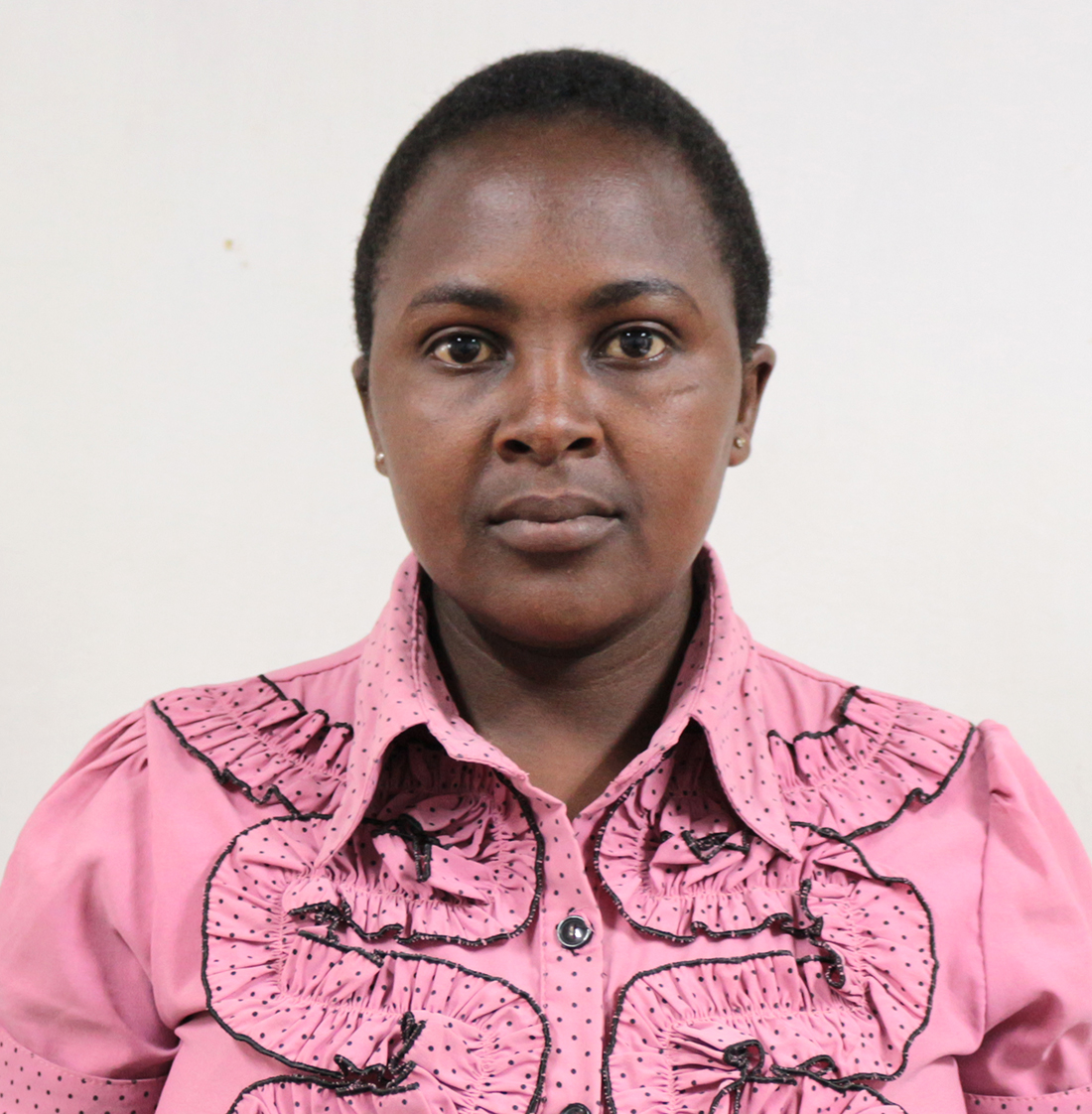
Victor Ochieng Omondi

<p><strong>Research Project:</strong> Characterization of Rumen Metabolites including Greenhouse Gases.</p> <p><strong>Research interest</strong>: Victor Omondi is a trained Chemist from the University of Kabianga and is presently an MSc Analytical Chemistry student at the University of Nairobi, Department of Chemistry. Omondi is an aspiring research scientist with interests in Analytical chemistry, Environmental Conservation &amp; Sustainability. His beliefs revolve around the application of chemistry principles to solve existing societal, environmental and biotechnological problems through research aided by modern Analytical techniques and instruments. His present research on characterization of rumen metabolites including greenhouse gases aims at providing insights on the rumen chemistry and greenhouse gas emission among livestock within a pastoral set up. This is in abid to design practical approach of making livestock green and less vulnerable to vectors.</p> <p><strong>Research goals</strong>: Apply chemistry Concepts to develop novel practical mechanisms of mitigating environmental pollution vis-a-vis climate change.</p>

Kawira Mathenge

<p><strong><em><span style="color:#201F1E">Research project title:</span></em></strong><em><span style="color:#201F1E">&nbsp; </span></em><span style="color:#201F1E">Investigating the role of wildlife in the transmission of Animal trypanosomiasis in Shimba Hills National Reserve, Kwale County, Kenya.</span></p> <p><em><span style="color:#201F1E"><strong>Research goals:</strong>&nbsp;</span></em><span style="color:#201F1E">Her research focuses on elucidating the importance of sylvatic transmission to animal trypanosomiasis, as well as understanding the transmission of trypanosomes between wildlife and livestock in Shimba Hills National Reserve, allowing animal health agencies to better manage disease risk and better localise and prioritise control strategies.</span></p> <p><em><span style="color:#201F1E"><strong>Supervisors:</strong>&nbsp;</span></em><span style="color:#201F1E">Dr. Daniel Masiga (Animal Health) and Dr. Andrew Jackson (University of Liverpool)</span></p> <p><em><span style="color:#201F1E"><strong>Bio:</strong>&nbsp;</span></em><span style="color:#201F1E">Kawira graduated from the University of Nairobi with a Bachelor of Science degree in Biochemistry in 2016. In 2017, she joined <em>icipe</em> as a research assistant in the molecular biology and bioinformatics unit under the supervision of Dr. Dan Masiga. She participated in a study aimed to evaluate t</span><span style="color:#201F1E">he effectiveness of <em>icipe</em>’s tsetse fly repellent technology for controlling Animal African&nbsp;Trypanosomiasis (AAT).&nbsp;Her role&nbsp;was to evaluate the prevalence of trypanosomiasis in cattle&nbsp;enrolled in the study, which took place in the villages around the Shimba Hills National Reserve,&nbsp;Kenya. In 2018, she&nbsp;participated in a collaborative project with the Jackson laboratory (University of&nbsp;Liverpool) where she assisted a post-doctoral fellow from Liverpool in a study aimed at testing an approach<br /> for analysing <em>Trypanosoma congolense</em> variant antigen diversity in sequence data. From this, she was able to receive 6 months training at the University of Liverpool on trypanosome genomics which enabled her&nbsp;to&nbsp;generate and analyse transcriptomes first hand. She won an International Master's Fellowship grant with Wellcome Trust in 2019 and pursed her MSc in Advanced Biological Sciences at the University of Liverpool. She is currently focused on her fellowship project at <em>icipe</em> where she is investigating the role of wildlife in the transmission of AAT in Shimba Hills National Reserve.</span></p>


Stephen Mangara Wainaina

<p>Research Project: Modelling Pest Incidence repeated measures In Long-term Farming Systems<br /> Research interest: Modelling repeated measures of agricutural designed experiments using generalized linear mixed models.<br /> Research goals: To see how climate change impact on pest incidence and to see how different farming systems show their resistance to pest in long-term farming systems.<br /> Host project and funding:&nbsp;Research Institute of Organic Agriculture FiBL<br /> Supervisors: Dr. Chrysantus Mbi Tanga, Prof Anthony Waititu and Dr, Daisy Salifu.<br /> Bio: I completed my undergraduate studies in Mathematics and computer science in Taita Taveta Univercity (TTU), Kenya. I am currently registered for an MSc at Jomo Kenyatta University of Agriculture and Technology (JKUAT).</p>

Tracy Wanjiku Maina

<p>Research Project: Elucidating the horizontal transmission routes of Anopheles Symbiont Microsporidia MB</p> <p>Research interest: To evaluate different transmission routes and transmission rates of the symbiont Microsporidia MB in Anopheles arabiensis.</p> <p>Research goals: Exploring Microsporidia MB as a possible biocontrol tool for Malaria</p> <p>Host project and funding:&nbsp;Symbiovector</p> <p>Supervisors: Dr Jeremy Herren and Dr. Tullu Bukhari (ICIPE)</p> <p>Bio: I joined ICIPE in November 2019 as an intern under the symbiovector team.I completed my undergraduate studies in Medical Microbiology in 2019 and i am currently doing a masters in Molecular Biology and Bioinformatics in JKUAT.</p>