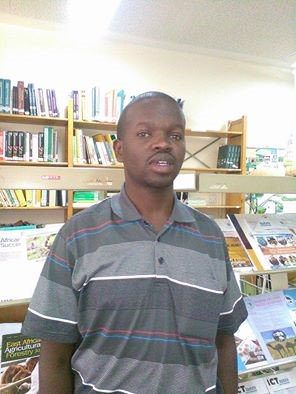
DRIP MSc scholar

DRIP MSc scholar

Kitheka Mundumwiu

<p><strong>Research project title: </strong>&nbsp;Assessment of Willingness to Pay for Larvae Spy acoustic technology in Kenya</p> <p>Kitheka a DRIP MSc fellow supervised by Dr Menale Kassie, Dr Paddy Likhayo, Dr Lucy Ngare, Dr Kyalo Willy and Dr Ibrahim N Macharia of Kenyatta University, Kenya. Kitheka’s research interests include Post harvest losses, and use of cost effective methods for postharvest losses mitigation. Kitheka is currently assessing the willingness to pay for Larvae Spy Acoustic technology as an early warning system against pest infestation on cereals in Kenya. Postharvest losses have been a challenge on the global strive towards achieving food security. This challenge may have resulted from the fact that pests’ detection is based on traditional subjective methods of physical scouting. Kitheka completed his Bachelor of Science Degree in Agribusiness Management and Trade at Kenyatta University (First Class Honours).</p>

Edward Edmond Makhulu

<p><strong>Research project title:</strong> Transmission dynamics of African trypanosomiasis in Narok County, Kenya.</p> <p>Edward is a PEER-BUSHMEAT MSc fellow supervised by Dr. Wambua Lilian and Dr. Adunga Vincent from University of Nairobi and Egerton University, Kenya respectively. Edward’s research interests include Biochemistry of the cell, Molecular Biology, Bioinformatics, Protein interaction and Host-vector-pathogen relationship research. Currently, Edward is trying to unravel the transmission dynamics for African Trypanosomiasis (AT) in Narok County, Kenya, a region onces classified as non-endemic.&nbsp; The WHO efforts to eradicate AT by 2020 have really yielded success with current statistics showing low prevalence of AT infection in Kenya of even lower than 0.01 in major AT foci. However, the disease is spreading to new localities previously categorized as non-endemic, as in the case of two tourist who were infected by AT after visiting Maasai Mara National Reserve in Narok County, Kenya. To understand the reasons for emergence of this disease in the new localities a comprehensive study on the host – vector – parasite interaction in the area is crucial to get a clear picture on the transmission dynamics favoring the disease emergence. Tsetse fly, the&nbsp;&nbsp;&nbsp; vector of the disease, provides a better platform in understanding the host – vector – parasite interplay as far as African trypanosomiasis transmission dynamics is concern.&nbsp; Therefore, this study aims to check on the African trypanosome species circulating in Maasai Mara National Reserve, the host blood preferences for the tsetse flies in the area and finally correlation of the fly infection with endosymbionts present in the collected flies (namely <em>Wolbachia</em>, <em>Sodalis glossinidus </em>and salivary hypertrophy virus) to infer on the vector competence. Edward completed his undergraduate degree in BSc in Biochemistry and Molecular Biology at the Egerton University.</p>

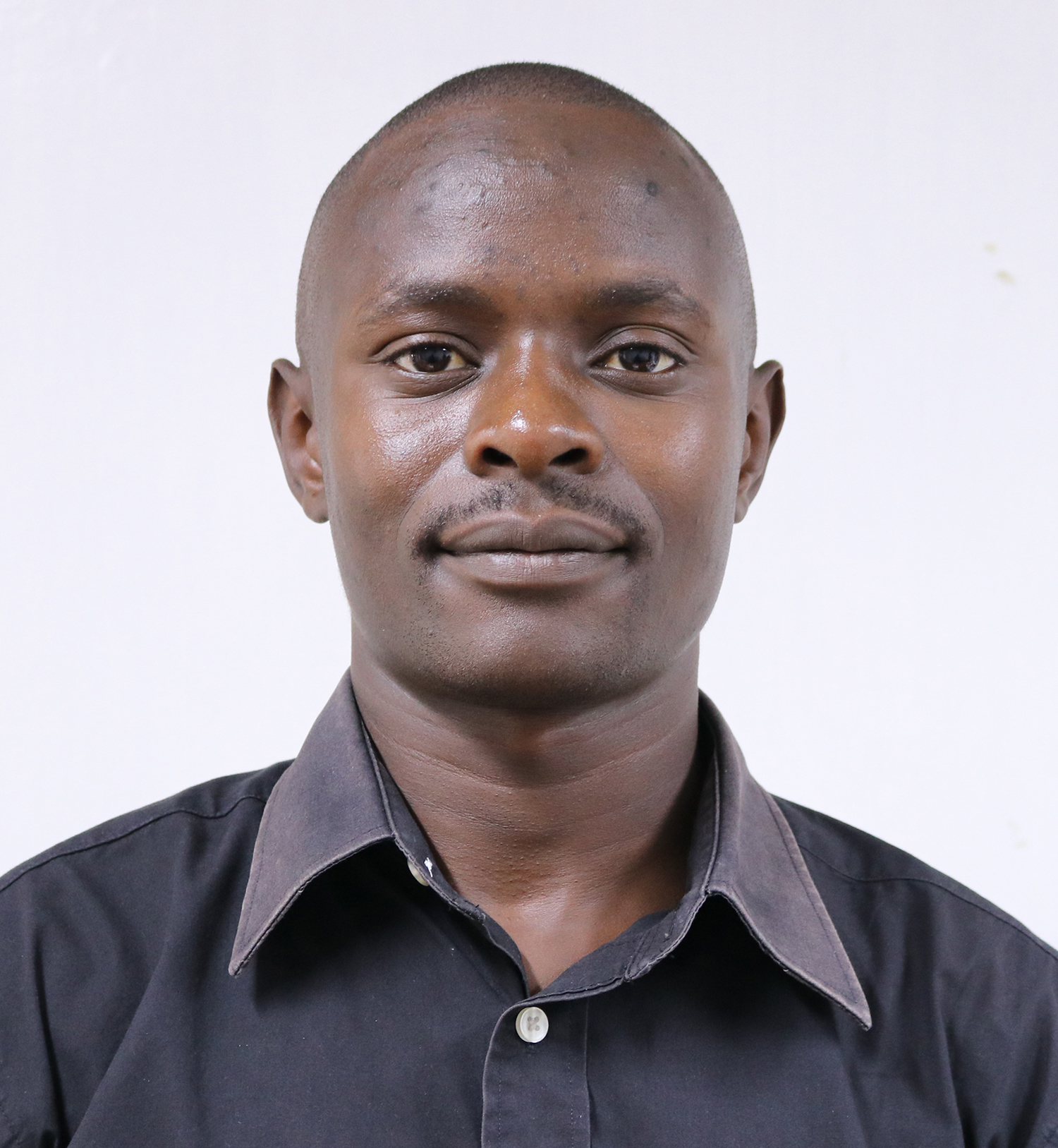
Harrison Njoroge Mburu

<p style="text-align:justify"><strong><span style="font-family:calibri,sans-serif; font-size:11.0pt">Research project title:</span></strong><span style="font-family:calibri,sans-serif; font-size:11.0pt">&nbsp; <span style="font-family:calibri,sans-serif">Identification of potato cyst nematode (PCN) species and Characterization of their populations from three potato growing regions in Kenya.</span></span></p> <p style="text-align:justify"><span style="color:black; font-family:calibri,sans-serif; font-size:11.0pt">Harrison is a DRIP MSc fellow supervised by Dr. Solveig Haukeland of&nbsp;<em><span style="font-family:calibri,sans-serif">icipe, </span></em>Dr. Laura Cortada-Gonzalez of IITA&nbsp;and Dr. Joel Bargul of Jomo kenyatta University of Agriculture and Technology (JKUAT), Kenya. Harrison’s research interests revolve around populations of potato cyst nematodes (PCN) found in Kenya (Nyandarua, Elgeyo Marakwet and Taita Taveta) and his research work would involve morphological and molecular identification of PCN, establish their distribution and phylogenetic relationships and determine their pathotypes/mitotypes.</span></p> <p><span style="color:black; font-family:calibri,sans-serif; font-size:11.0pt">Harrison is a graduate of Technical University of Kenya (TUK) with the degree of Bachelor of Philosophy in Biotechnology.</span></p>

Naomi Nyambura Riithi

<p><strong>Research project title:&nbsp; </strong>Developing a tool for contaminating wild <em>Glossina fuscipes </em>species with lethal doses of <em>Metarhizium anisopliae</em>.</p> <p>Naomi is a DRIP MSc fellow supervised by Drs. Michael Okal, Dan Masiga (icipe) and Prof. Elizabeth Kokwaro (Kenyatta University). Naomi’s research interests include Mycology, Molecular Biology and Medical Entomology and is currently developing a tool for contaminating wild <em>Glossina fuscipes </em>species with lethal doses of <em>Metarhizium anisopliae</em>.</p> <p>Tsetse control strategies put in place are greatly limited due to their high costs and environmental implications. Some of the controls involve use of insecticides, repellents and baited targets/traps majorly to control the vectors. The use of chemotherapy has been adopted to deal with the <em>Trypanosoma</em> pathogen. Generally, no control strategy that has proven to be satisfactory as a standalone. This therefore calls for development of new strategies as well as having integrated strategies for effective disease and vector control. The study focuses on control of tsetse using a pathogen; this is by formulation of <em>Metarhizium anisopliae </em>as a mycopesticide which has been found to be a viable in the control of tsetse flies and especially <em>Glossina fuscipes sp.</em> in the field and using a tiny target as the conidia delivery tool. Naomi completed her undergraduate studies in Bsc. Biology at the University of Nairobi.</p>

Kobia Jesee Makinya

<p><strong>Research project title:</strong>&nbsp; Assessment of hygiene status in various maize storage structures in relation to build up of pests, molds and aflatoxin in Nakuru County, Kenya.</p> <p>Kobia a DRIP MSc fellow supervised by Prof Tadele Tefera, Dr Christopher Mutungi (icipe) and Drs. Maina Wagacha and Judith Odhiambo (University of Nairobi, Kenya). His research interests include Post harvest losses, Food quality assessment and use of simple, cost effective methods for mitigation of postharvest losses. He is currently assessing the effect of storage hygiene practices in relation to build up of insect pests, molds and aflatoxin contamination in maize farmers storehouses in Nakuru County, Kenya. Campaigns aimed at popularizing modern storage technologies have not achieved meaningful quantitative reduction of postharvest losses. This failure may have resulted from the fact that farmers’ storage practices (most notably; storage hygiene) have been overlooked. This study aims at assessing postharvest handling practices, hygiene practices in grain storage and the effect of such practices on magnitude of losses incurred by farmers in Nakuru County, Kenya.</p> <p><strong>Bio:&nbsp;</strong> He completed his Bachelor of Science Degree in Microbiology and Biotechnology at the University of Nairobi.</p> <p>&nbsp;</p>

William Limo

<p><strong>Research project title:</strong>&nbsp; Identification of <em>Trypanosoma brucei rhodesiense </em>strains responsible for varying disease outcomes in mouse and their establishment in insect vector, tsetse fly.</p> <p>William Limo is a DRIP MSc fellow supervised by Dr. Daniel Masiga (<em>icipe),</em> Dr. John Thuita (<em>BioRI-KALRO),</em> and Drs. Vincent Adung’a, Robert Shivairo (<em>Egerton University, Kenya)</em>. Limo research interests are in neglected tropical diseases (NTDs); African trypanosomiasis, and in particular host/vector-parasite relationship.</p> <p>William Limo (BSc. Bmed, Dip Anhe) completed his undergraduate studies in <em>BSc.</em> <em>Biomedical</em> <em>Science &amp; Technology</em> and <em>Diploma in Animal Health</em> both from <em>Egerton University.</em></p>